Why AI Can Crack a 90-Year-Old Maths Problem and Still Get Your Invoice Wrong
AI can do brilliant work and still fail a simple task. Leaders need to separate what it can do from whether they can depend on it.
13 Oct 2026
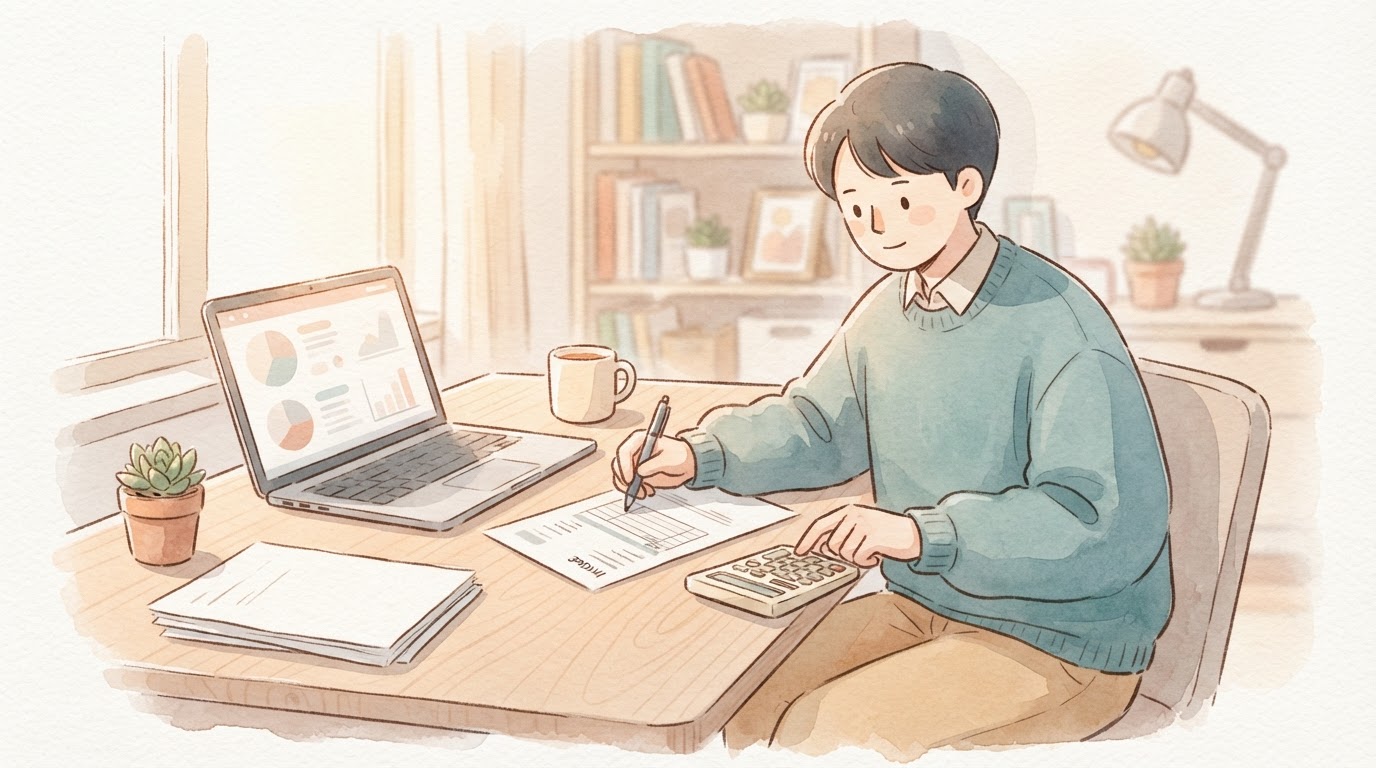
You read that an AI system may have solved one of the hardest problems in mathematics. Then a tool from the same family reads a supplier invoice, gets the total wrong, and states it with complete confidence.
Both things can be true. The mistake is treating them as one question.
Both stories are true at the same time
On 8 September 2026, OpenAI reported an AI-generated proof for the Navier-Stokes problem. It asks whether smooth fluid flow can suddenly break down, and it has resisted mathematicians for about 90 years. It is one of the Clay Mathematics Institute's Millennium Prize Problems.
Clay's own announcement says the problem "has apparently been settled", and that its review process is "deliberately unhurried". So the honest phrase is: it may have been solved. I keep that hedge, and so should you.
Now the other side. A 2025 study took famous maths and logic puzzles that leading models solve well, then made them easier. The models often did worse on the easier versions. The familiar pattern pulled the answer off course.
That study tested different systems from the one behind the proof. The lesson still holds. AI capability is real, and it is uneven. Brilliance on one task tells you very little about the next.
Three questions hide inside every impressive result
When someone shows me an impressive AI output, I split it into three questions.
Capability is what the system demonstrably did, on this task. You can watch it happen.
Intelligence is the broader ability that the performance might imply. It is an inference, and its meaning depends on how you define the word.
Reliability is whether you can depend on the result under defined conditions: this task, your data, an error rate you can live with. You only learn it by testing in your own setting.

The shortcut most of us take jumps from "it did something brilliant" to "we can trust it". That jump borrows trust from a headline instead of earning it at home.
A fluent answer is not evidence
It helps to open the box just enough. Today's text tools write an answer one small piece at a time. Each time, they pick a likely next word given everything written so far.
That is why a tool can write "The order is late because the supplier has not shipped it" without anyone checking the supplier. The sentence is plausible. Nothing in the process confirmed it.
Your invoice works the same way. The tool produces a number that looks like a total. Whether it matches the lines on the page is a separate fact, and checking it is a separate step.
So I hold one rule. Fluency shows the system can write. It does not show the claim is true. How much you verify should rise with the cost of being wrong.
Reliability is earned in your setting, not borrowed
Reliability belongs to a specific use, not to a product. It depends on the task, the information the system is given, the evidence it can point to and the checks around it. The same tool can be dependable at sorting your support emails and undependable at reading your invoices.
That gives you a simple map for any proposed use.
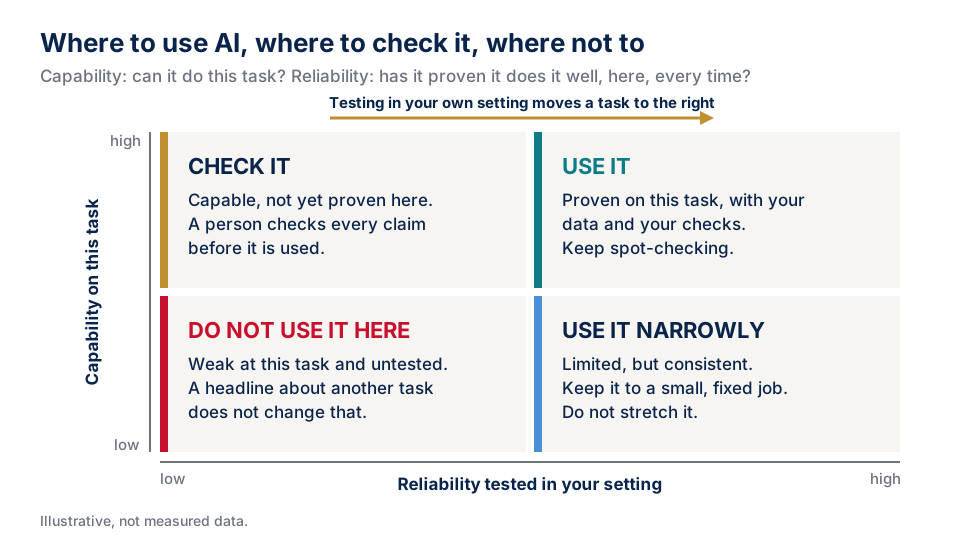
Most useful AI work today sits top-left. The system is capable, but nobody has shown it is dependable here yet. That is fine. It means a person checks before the output leaves the building.
The mistake is treating that corner as top-right because of a headline about somebody else's system.
Decide each output: use, revise or hold
For any AI output that matters, I sort its claims into three piles. Supported by evidence I can point to. Reasonable inference. Unsupported.
Then I weigh the cost of an error and how I would check it. Then I make one of three calls. Use it. Revise it against the evidence. Or hold it until someone has verified it.
You cannot hand that call to the tool. It is a management decision, and it stays with a named person.
On Monday, pick one task your team already does with AI. Write three sentences about it. What has it actually shown it can do? What are we tempted to conclude from that? What evidence and checks would justify relying on it? If the third sentence is empty, you have found your next piece of work.
Want to go further? The free lesson walks through these three questions with a real task from your own organisation, so you leave knowing when an AI output has earned your trust.
Join the free 30-minute lesson, For Leaders: How Can AI Solve a Millennium Problem Yet Fail?, on Wednesday 21 October at 7pm London.
AI Transformation for Organisational Leaders is an eight-session live cohort I teach with Anoosh Zeighami, starting Wednesday 4 November. You leave with a one-page 2027 AI plan for your organisation.
AI Transformation for Organisational Leaders
For directors, heads of function and founders: eight live evening sessions with Ehsan Gazar and Anoosh Zeighami, ending with a one-page 2027 AI plan for your organisation, built on a real workflow and ready for your leadership team.
$1,495, or $1,045 with code EARLYBIRD until 23 Oct.
View the live cohortKeep reading
- I Use AI Every Day: Why I Built a Place to Practise the Old Problems
- How I Find Problems Worth Solving
- Notes on Software Quality
- I Built a Tool to Compare Senior Engineer Salaries Across 17 Cities, and I Want Your Take
- MongoDB.local London 2025: AI, RAG, and the Future of Data
- Engineering Change Management: Kotter's 8-Step Playbook