Considering Elm Lang for future
I kept hearing about Elm in conference talks. "No runtime exceptions." "Compiler as assistant." So I spent a few weeks building a small project with it. H...
14 Oct 2023

I kept hearing about Elm in conference talks. "No runtime exceptions." "Compiler as assistant." So I spent a few weeks building a small project with it. Here's what I found.
What Elm actually is
Elm is a functional programming language that compiles to JavaScript. It enforces two core ideas:
- Functional purity — functions have no side effects.
- Data immutability — you never mutate state directly.
The result: the compiler catches almost everything before your code runs. The creator claims zero runtime exceptions in production. That's not marketing. It's a consequence of the language design.
- Strong static types with readable compiler messages
- No
nullorundefined— impossible to leave edge cases unhandled - Immutability by default — code is easier to reason about
- No runtime exceptions — reliability you can't get from JavaScript alone
The architecture
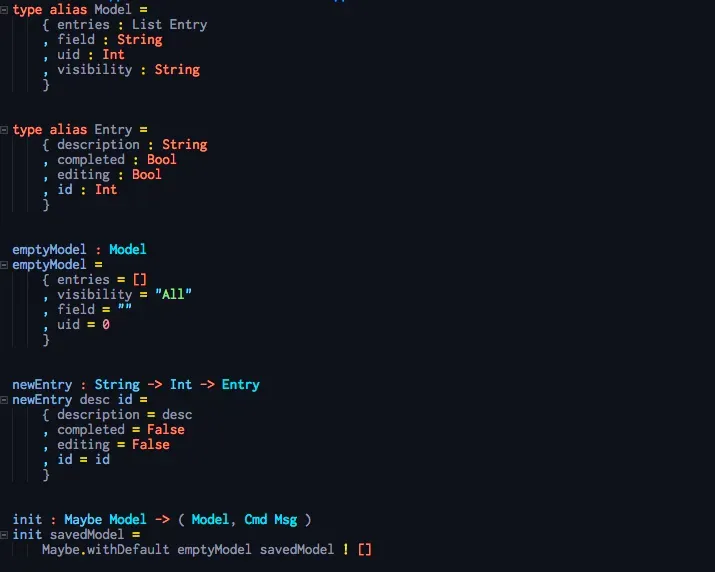
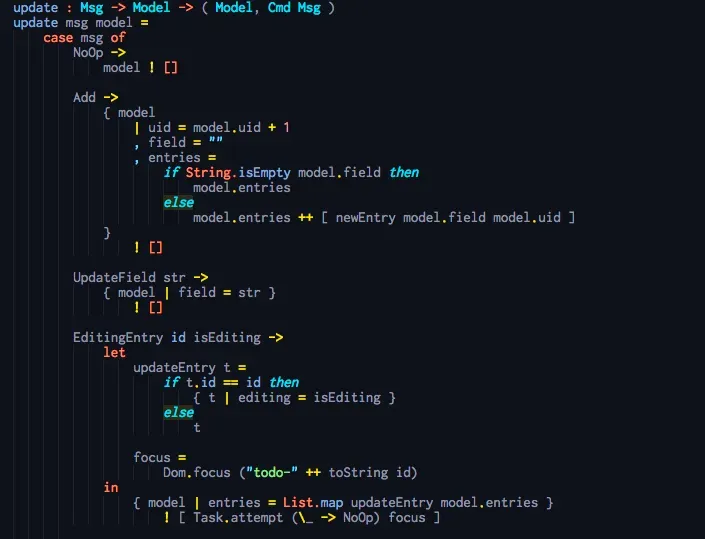
Elm's architecture is simple: Model, Update, View. If you've used Redux, this will look familiar. Redux was directly inspired by Elm.
Model — the state of your application
Update — a way to update your state
View — a way to view your state as HTML
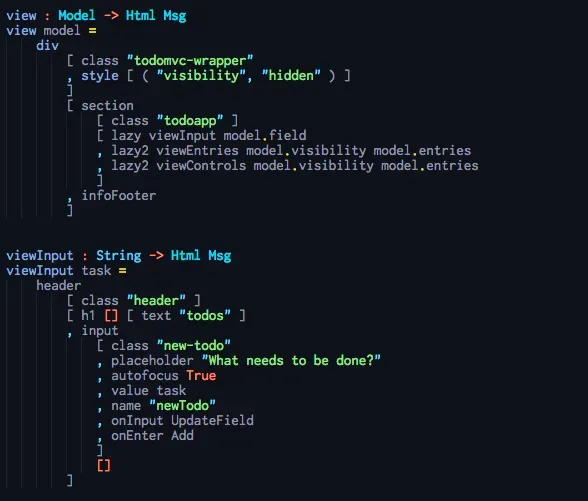
The syntax is different from JavaScript. But the architecture gives you a standard way to structure every project.
Performance
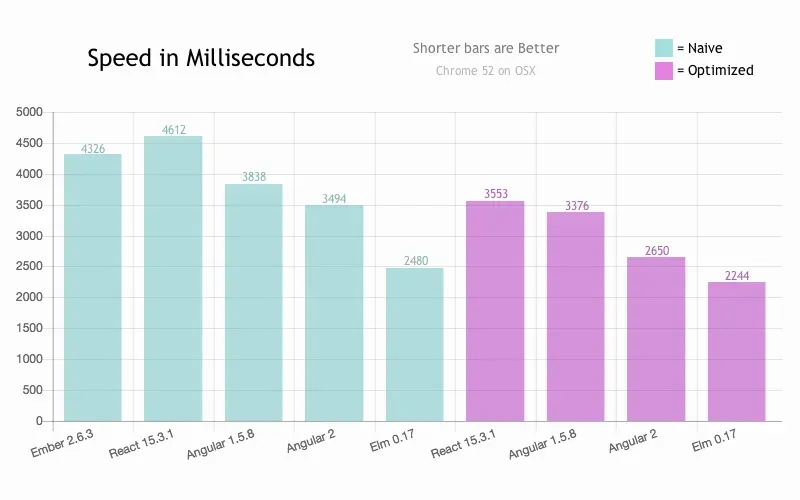
Elm compiles to efficient JavaScript and uses a virtual DOM. It consistently benchmarks well against React and Angular.
Elm vs React, Angular, and others
- Both Elm and React install via npm. Elm also ships its own package manager.
- Elm communicates with JavaScript through flags (one-way) and ports (two-way).
elm-reactorgives you a built-in dev server for rapid prototyping.- Elm's package ecosystem is tiny compared to React's.
The real drawbacks
Skills don't transfer. Elm knowledge doesn't help you in React, Vue, or any other frontend framework. You're investing in an island.
No server-side rendering. If SEO matters to you, Elm is a non-starter right now.
No DOM access. You can't measure element dimensions or do manual DOM manipulation. That's how they guarantee no runtime exceptions — by removing the escape hatch.
Stateless messages. Simulating a click event isn't trivial like it is in JavaScript.
My verdict
I love the compiler. I love the zero-exception guarantee. But for the projects I work on, two things killed it:
- No SSR. Most of my sites need server rendering.
- No DOM access. That's a dealbreaker for the interactive UIs I build.
The language trades flexibility for safety. That trade-off is worth it for some teams. It wasn't worth it for mine.
If you do decide to try Elm, start small. You can embed compiled Elm JavaScript into an existing project — just convert a few components first before going all in.
Resources
AI Transformation for Organisational Leaders
For directors, heads of function and founders: eight live evening sessions with Ehsan Gazar and Anoosh Zeighami, ending with a one-page 2027 AI plan for your organisation, built on a real workflow and ready for your leadership team.
$1,495, or $1,045 with code EARLYBIRD until 23 Oct.
View the live cohortKeep reading
- TypeScript Anti-Patterns That Cost You Twice: Build Time, Runtime, and the Interview
- The Frontend Toolchain Is Now Written in Rust and Go. What That Means for You
- oxlint vs ESLint: Why I Replaced ESLint with oxlint
- SystemJS Is Dead. Native ESM Finally Won.
- Replace Axios with a Simple Custom Fetch Wrapper (Production-Ready Guide)
- Stop Shipping ChatGPT Wrappers. Ship an Agent in TypeScript, or Don't Bother.