Svelte vs React in Details
I decided to learn Svelte by building something with it. Not reading docs first. Not watching tutorials. Just cloning examples and seeing what happens. He...
15 Oct 2023

I decided to learn Svelte by building something with it. Not reading docs first. Not watching tutorials. Just cloning examples and seeing what happens. Here's what I found.
Getting started
I started with the official svelte-todomvc repo. Cloned it, ran npm install, and immediately got an error.
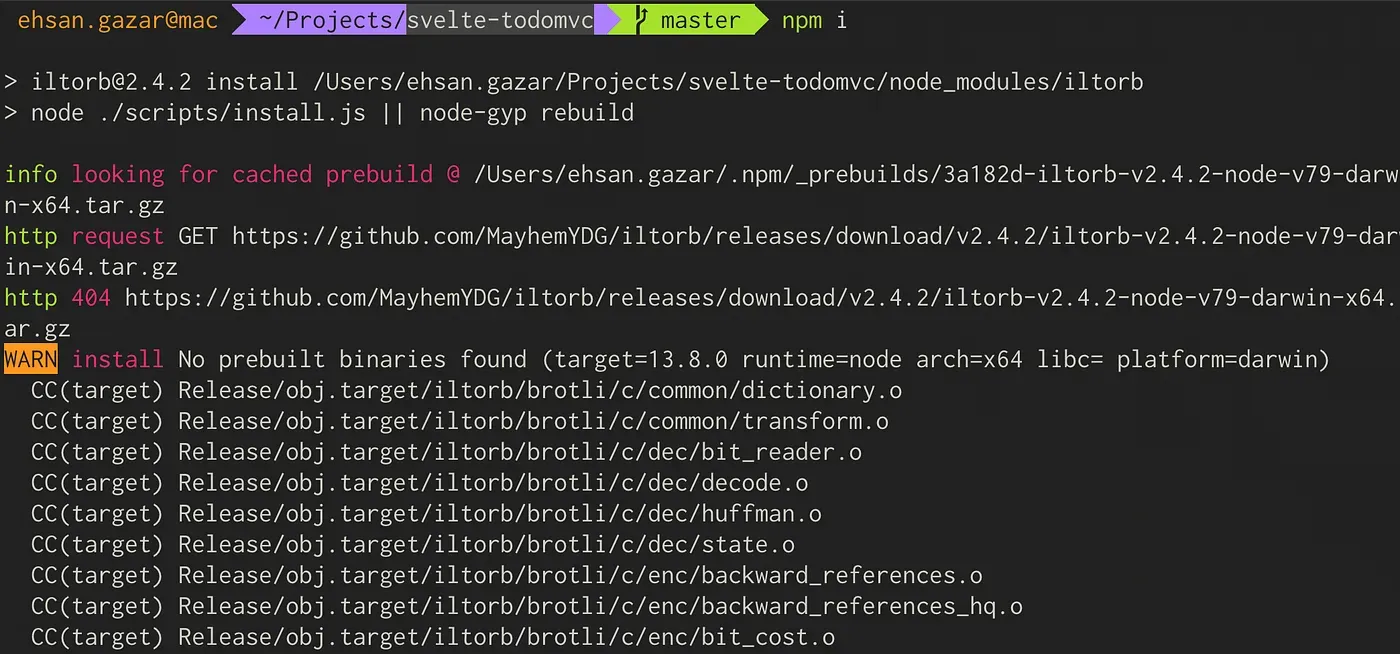
I moved on. Sometimes the fastest way to learn is to try the next example.
The realworld example worked perfectly. npm install, npm run dev, and the app was running.

It was fast. But not noticeably faster than a well-built React app. The speed advantage was there in benchmarks, not in a way that would convince a product manager or stakeholder to switch frameworks.
Technical differences that matter
No Virtual DOM. Svelte compiles your components to vanilla JavaScript at build time. React uses a Virtual DOM to diff changes and batch updates. Svelte updates the DOM directly. This means smaller bundle sizes and less runtime overhead, but React's diffing algorithm handles complex UIs with many interdependent state changes more gracefully.
Smaller bundles. Since Svelte compiles away, you don't ship a framework runtime. A Svelte app's baseline JS is significantly smaller than React's. This matters most on low-end devices and slow networks.
Compile-time reactivity. In React, you declare dependencies explicitly (useState, useEffect deps arrays). In Svelte, reactivity is implicit. Assign to a variable and the UI updates. It's less boilerplate but also less explicit about what triggers what.
Development experience
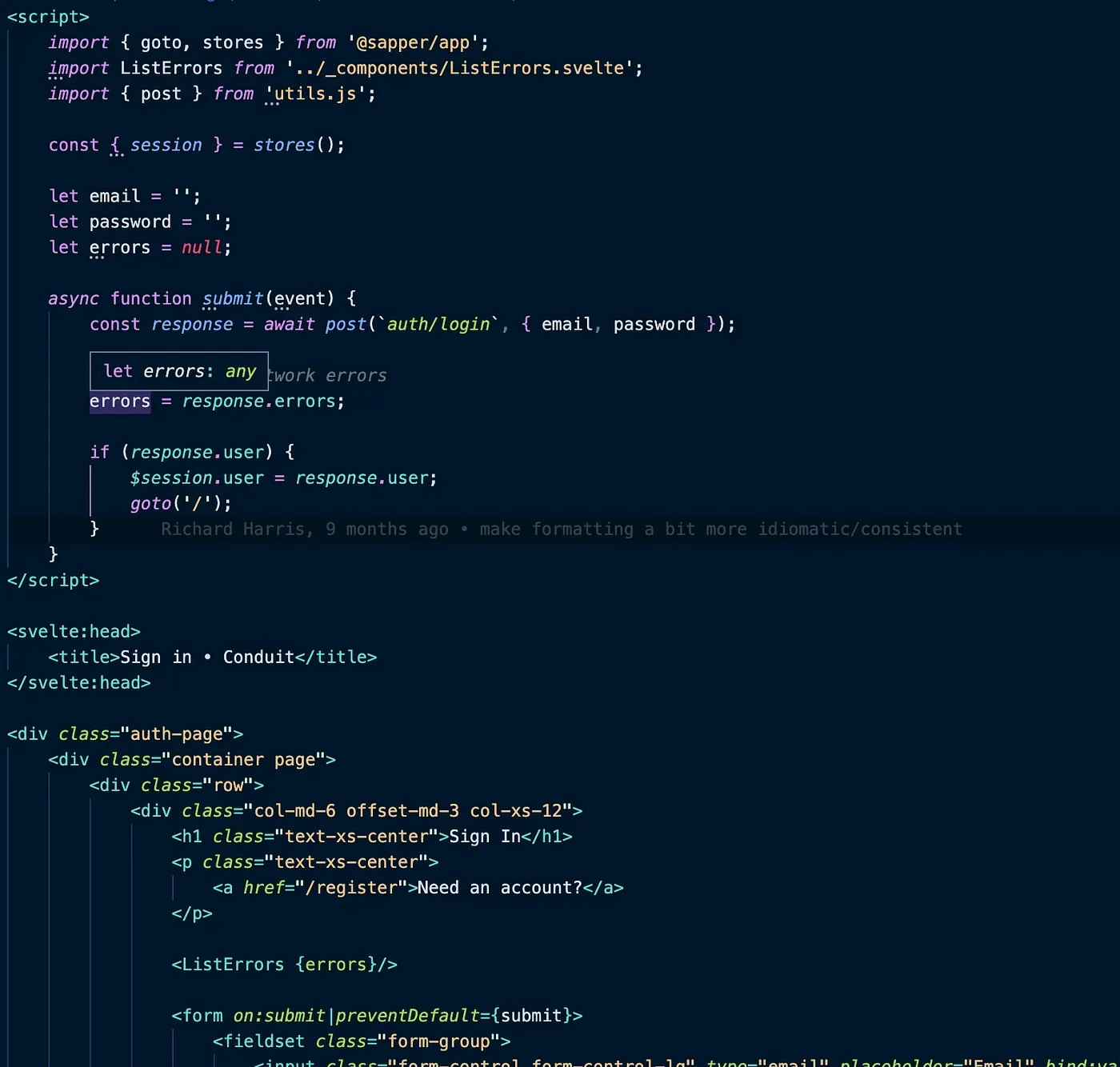
Svelte components put JavaScript, HTML, and CSS in a single file. It's clean and readable. Components import like you'd expect:
import ListErrors from '../_components/ListErrors.svelte'The syntax is approachable. But coming from React, I missed the explicitness of JSX. In React, everything is JavaScript. In Svelte, you're mixing template syntax with JavaScript, which can feel less predictable when building complex logic.
The trade-offs
Svelte wins: smaller bundles, simpler syntax for basic apps, less boilerplate, faster initial load times.
React wins: larger ecosystem, more libraries, better tooling (TypeScript support, DevTools), concurrent rendering features, server components, and a massive hiring pool.
When to choose Svelte
Svelte is a strong choice for small to medium projects, especially when performance and bundle size are critical constraints. If you're building a widget, a simple web app, or targeting constrained environments, Svelte delivers a lot with very little.
For large-scale applications with complex state management, multiple teams, and a need for extensive ecosystem support, React remains the safer bet. The framework itself is heavier, but the ecosystem around it is unmatched.
AI Transformation for Organisational Leaders
For directors, heads of function and founders: eight live evening sessions with Ehsan Gazar and Anoosh Zeighami, ending with a one-page 2027 AI plan for your organisation, built on a real workflow and ready for your leadership team.
$1,495, or $1,045 with code EARLYBIRD until 23 Oct.
View the live cohort