Binary Search Trees (BSTs) Algorithm
A sorted array gives you fast search but slow inserts. A linked list gives you fast inserts but slow search. A Binary Search Tree tries to give you both.
20 Mar 2024
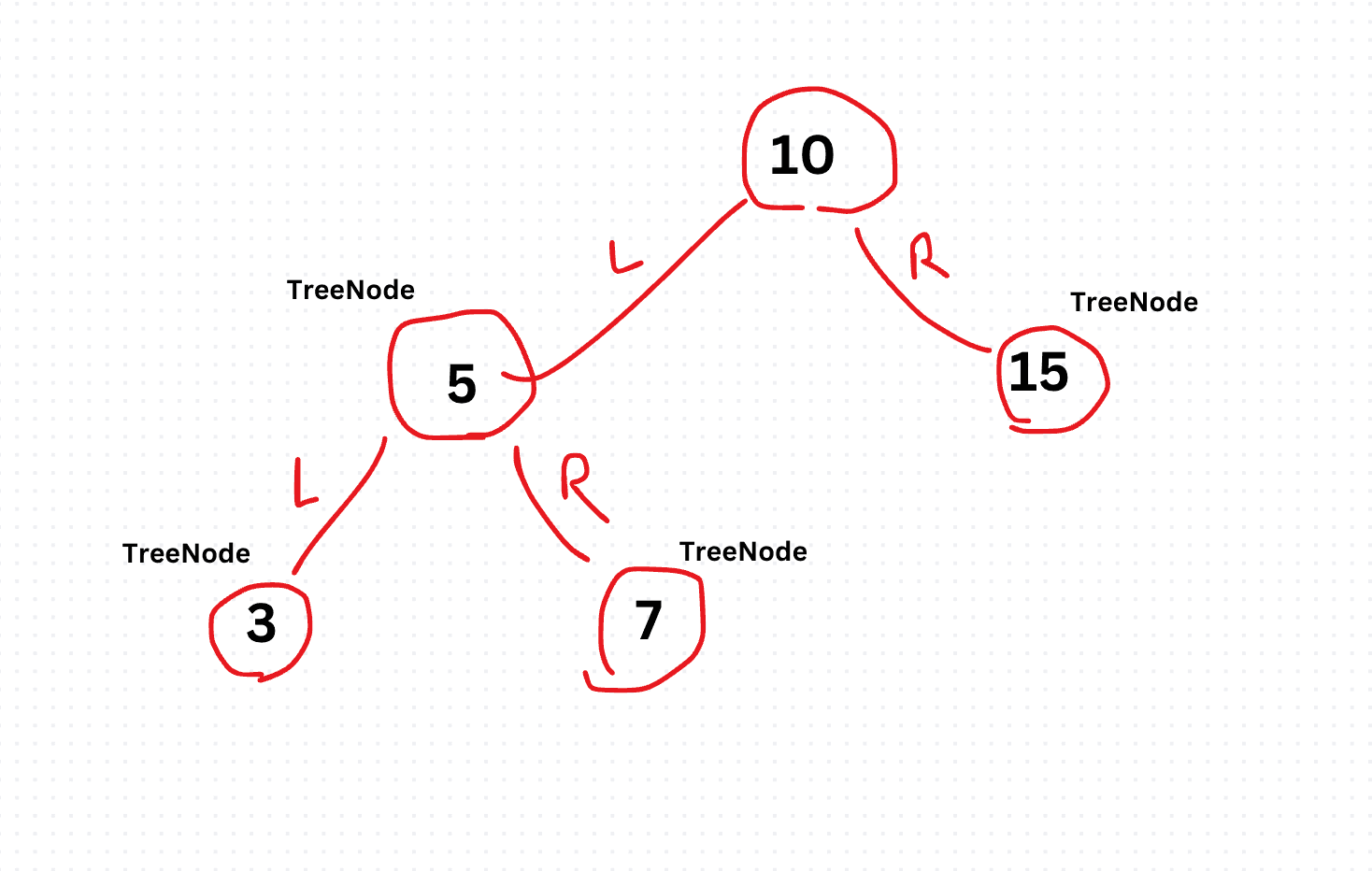
A sorted array gives you fast search but slow inserts. A linked list gives you fast inserts but slow search. A Binary Search Tree tries to give you both.
What It Does
A BST is a tree where every node follows one rule: left children are smaller, right children are larger. This structure lets you search, insert, and delete in O(log n) time — on average.
The Implementation
class TreeNode {
  constructor(value) {
    this.value = value;
    this.left = null;
    this.right = null;
  }
}

class BST {
  constructor() {
    this.root = null;
  }

  insert(value) {
    const node = new TreeNode(value);
    if (!this.root) { this.root = node; return; }

    let current = this.root;
    while (true) {
      if (value < current.value) {
        if (!current.left) { current.left = node; return; }
        current = current.left;
      } else {
        if (!current.right) { current.right = node; return; }
        current = current.right;
      }
    }
  }

  search(value) {
    let current = this.root;
    while (current) {
      if (value === current.value) return current;
      current = value < current.value ? current.left : current.right;
    }
    return null;
  }

  inorder(node = this.root, result = []) {
    if (!node) return result;
    this.inorder(node.left, result);
    result.push(node.value);
    this.inorder(node.right, result);
    return result;
  }
}

const tree = new BST();
[8, 3, 10, 1, 6, 14, 4, 7, 13].forEach(v => tree.insert(v));

console.log(tree.search(6));     // TreeNode { value: 6, ... }
console.log(tree.inorder());     // [1, 3, 4, 6, 7, 8, 10, 13, 14]
Traversals
- Inorder (left → node → right): gives sorted output.
- Preorder (node → left → right): useful for copying the tree.
- Postorder (left → right → node): useful for deleting the tree.
Complexity
| Operation | Average | Worst |
|---|---|---|
| Search | O(log n) | O(n) |
| Insert | O(log n) | O(n) |
| Delete | O(log n) | O(n) |
The Trap
That O(n) worst case is real. Insert sorted data into a BST — 1, 2, 3, 4, 5 — and you get a linked list. Every operation becomes linear.
Self-balancing trees (AVL, Red-Black) fix this by rebalancing after insertions and deletions. They guarantee O(log n) worst case, at the cost of more complex insert/delete logic.
The Trade-off
BSTs give you sorted order + fast operations. But if you only need fast lookup by key, a hash map is O(1) average. If you need sorted data but don't need frequent inserts, a sorted array with binary search is simpler. BSTs shine when you need both dynamic inserts and sorted traversal.
AI Transformation for Organisational Leaders
For directors, heads of function and founders: eight live evening sessions with Ehsan Gazar and Anoosh Zeighami, ending with a one-page 2027 AI plan for your organisation, built on a real workflow and ready for your leadership team.
$1,495, or $1,045 with code EARLYBIRD until 23 Oct.
View the live cohortKeep reading
- The Algorithms Worth Knowing in Code Review: Cutting Big O Without Being Clever
- Tracking Down the Mystery: Finding the Unique Delivery ID
- Elusive Least Occurring Number in an Array
- Solving the Height of a Binary Tree Puzzle
- Harry Potter Discounts: A Code Challenge Algorithm
- Implementing a Task Heap Service in TypeScript